
The Mandatory Cherry
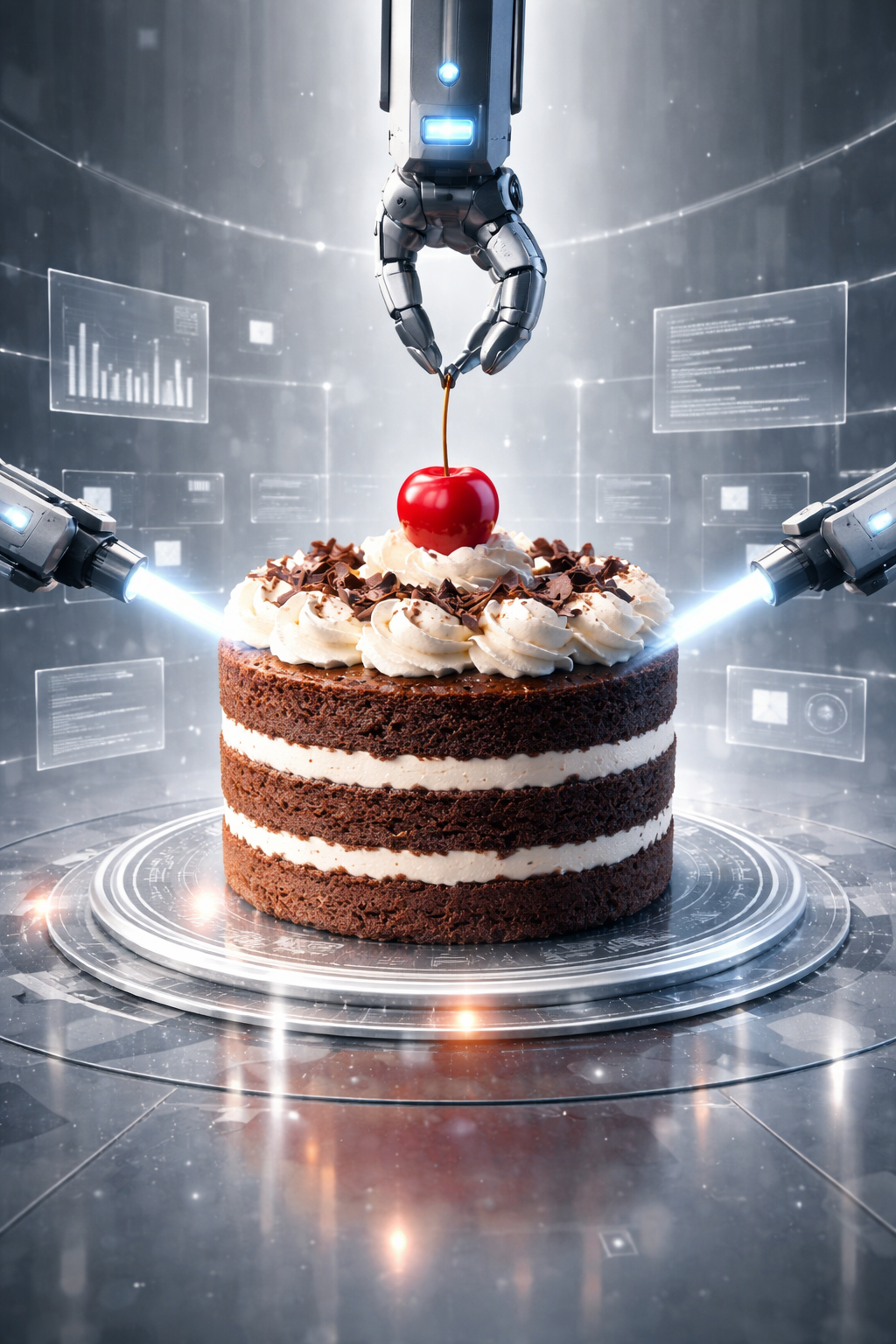
I love cake.
Not because of the cherry on top. But because of the cake itself, the dough, the cream, the layers. The cherry was always a bonus. A nice touch. Something that made a good thing a little better. But if it wasn’t there, I could still enjoy my cake just fine.
That’s how I used to think about AI.
Four years ago, AI was the cherry. It made things a little smarter, a little faster. Netflix recommended a show you might like. Your email filtered out the spam. A map found you a faster route. These were small, quiet improvements to life. Nobody told you that you needed them. Nobody said you were falling behind without them.
AI was optional. And that felt right.
The Kid Who Chose the Cherry Early
I remember my college days well.
While most of my classmates were focused on web development and mobile apps, the “safe” paths, the ones with clear job offers waiting at the end, I was fascinated by something different. Machine learning. Artificial intelligence. The idea that a machine could learn from data and make decisions felt like magic to me. I wanted to spend my career exploring that.
People thought I was being unrealistic.
Friends, classmates, even some people who meant well would say things like: “AI? That’s very niche. You won’t find a job easily. Focus on web or mobile، that’s where the market is.” Some said it with concern. Some said it with a laugh. But the message was the same: you are choosing the hard road for no good reason.
I chose it anyway.
And here is the irony that still makes me smile: the same field that people warned me would leave me unemployed is now the field that everyone is being told they must embrace or they will become irrelevant.
The cherry I picked up quietly, before anyone cared about it, is now being forced onto every plate.
I do not say this to feel superior. I say it because it taught me something important: the value of a thing does not change based on how many people are talking about it. AI was interesting and powerful back then. It is interesting and powerful now. What changed is not the technology. What changed is the noise around it.
And noise, I have learned, is rarely a good guide for important decisions.
Something Changed
Then, almost overnight, the story shifted.
It started around/late 2022, when AI tools became public and easy to use. Suddenly, everyone had an opinion. Every headline. Every conference. Every LinkedIn post. The message was the same, just dressed differently each time:
“Use AI or get left behind.”
“AI will replace people who don’t adapt.”
“The future belongs to those who embrace AI now.”
And just like that, the cherry became mandatory.
Not because the cake stopped being good without it. But because someone, somewhere, decided that a cake without a cherry is no longer a real cake.
Did We Choose This?
Here is what bothers me the most: I don’t remember voting for this.
I don’t remember a moment where humanity sat down and said, “Yes, we want AI to be at the center of everything we do.” It just… happened. Fast. Faster than we could think about it clearly.
The printing press changed the world, but it took generations to settle into human life. The internet reshaped everything, but we had years to argue about what it meant. With AI, that breathing room was gone. The hype moved faster than the thinking.
And when something moves that fast, you have to ask: who benefits from the speed?
The companies building AI tools benefit. The investors behind them benefit. The governments who want to claim they are “leading in AI” benefit.
But did you benefit? Did you get to choose?
The Productivity Trap
The most common argument you hear is this: AI makes you more productive.
And maybe it does. But productive at what? For whom?
Productivity is not a goal. It is a tool. A means to an end. If AI helps you do more of something you deeply care about, that is wonderful. But if it just helps you do more, more emails, more reports, more content, without asking whether any of it matters, then you are not living better. You are just running faster on the same wheel.
The “be more productive” message feels empowering on the surface. But underneath it is a quiet assumption: that your value is measured by your output. And that is a very old, very tired idea dressed up in new technology.
What We Are Really Losing
Before AI became mandatory, there was something beautiful about struggling with a hard problem yourself.
You sat with it. You thought. You got it wrong. You tried again. And when you finally got it right, or even when you didn’t, something happened inside you. You grew. You learned how to think.
When a tool starts doing that thinking for you, the shortcut is obvious. But the loss is invisible.
I am not saying AI is bad. I am saying that when we stop choosing it and start needing it, something shifts. The tool stops serving us. We start serving the tool.
The Question Nobody Is Asking
Here is a question I rarely hear:
Does humanity actually need AI this much?
Not “can AI help?”, yes, it can, in many situations. But need? In the deep sense of the word?
Humanity built the pyramids without AI. Shakespeare wrote without AI. We landed on the moon without AI. We fell in love, raised children, made art, and found meaning, all without AI.
None of that is an argument against progress. But it is a reminder that the story of human greatness was written long before the algorithm arrived. And it was written by people who had to think, to struggle, to feel.
My Honest Position
I am not against AI. I work with it every day. I have seen it solve real problems and create genuine value.
But I am against the pressure. The manufactured urgency. The feeling that if you pause to question whether AI belongs in a particular part of your life, you are somehow naive or falling behind.
The cherry was never mandatory. You can still eat the cake without it.
The best technologies in history found their place quietly, over time, through genuine usefulness, not through a wave of hype that made people afraid to say no.
We deserve the right to choose. To decide where AI fits, and where it does not. To keep some parts of our thinking, our creativity, and our struggle human.
Not because we are afraid of technology. But because we know what makes us human, and we are not ready to hand it over just yet.
The cake was always good. The cherry was always optional. Let’s not forget that.